





How Often Should You Service Your Jeep Wrangler? (Official 2026 Mopar + Owner’s Manual Advice)
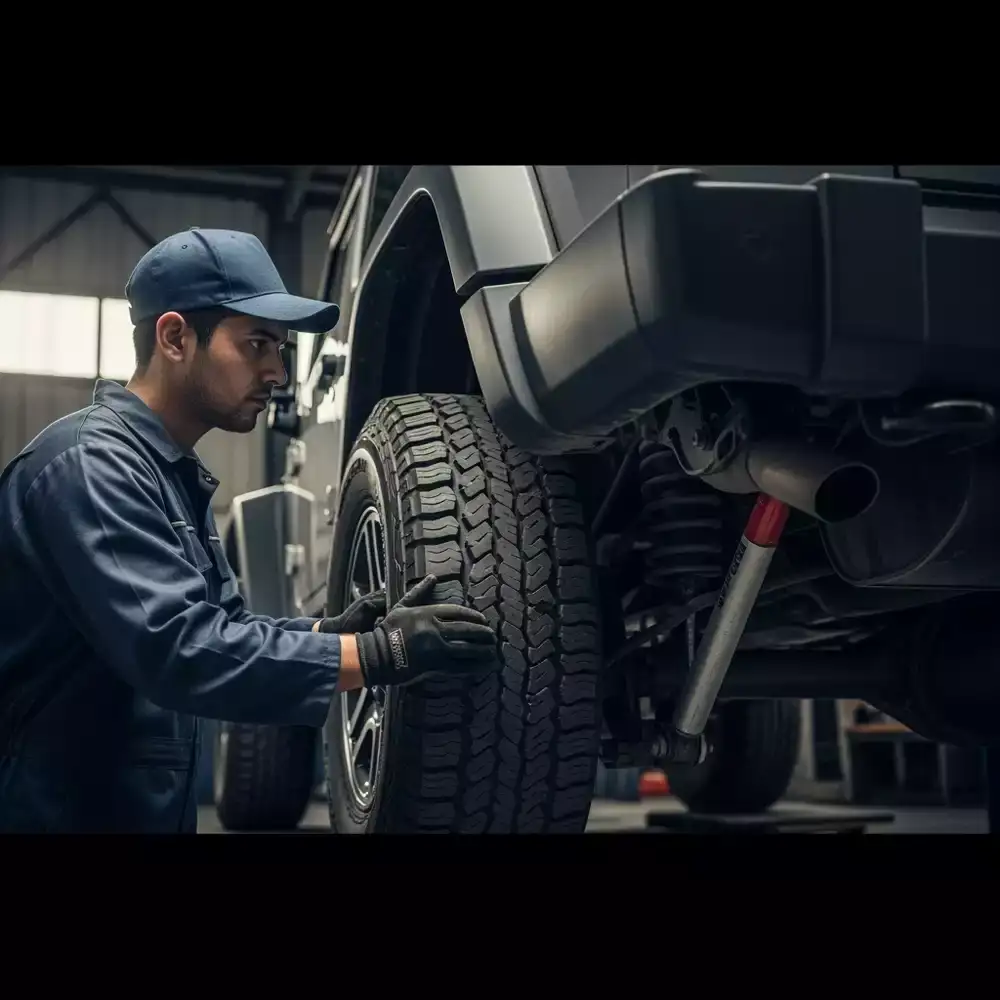
TL;DR: The 2026 Jeep Wrangler maintenance schedule combines Mopar’s mileage-based service intervals with a smart oil change indicator system, ensuring your vehicle gets the right care based on how it’s actually driven. This guide breaks down exactly what to expect at every major milestone and how to adjust for real-world use.
- Oil changes are triggered by driving conditions but should never exceed 10,000 miles or 12 months
- Key inspections (brakes, suspension, joints) repeat every ~10,000 miles starting at 20k
- Engine air filters (~30k+) and spark plugs (60k–100k depending on engine) follow set intervals
- Coolant flush is required at 150,000 miles or 10 years
- Severe use (off-road, towing) requires more frequent fluid changes and inspections
If you’re driving a 2026 Jeep Wrangler, your maintenance schedule isn’t as simple as following a set mileage chart. But it’s also not quite as simple as waiting for a dashboard light to come on either.
For the new Wrangler, Jeep uses a condition-based oil monitoring system to determine when your engine oil needs service. It’s generally better to rely on that than go by set intervals because if you drive a lot, you may need service sooner than the official service schedule intervals suggest. But if you drive less, you might be able to wait longer. However, that advice is limited to oil changes.
All other services—like filters, spark plugs, fluid inspections, and major replacements—still follow fixed intervals outlined in the official Mopar schedule and owner’s manual schedule.
Jeep Wrangler Service, Made Easy
Understanding how these two systems work together is key to maintaining your Wrangler properly—and avoiding missed or delayed service. That’s why, in an attempt to make understanding Wrangler service easy, we’ve compared both the Mopar schedule and owner’s manual schedule and written this post.
While you should always refer to the Mopar schedule and/or owner’s manual schedule, or reach out to a qualified Jeep service provider for specifics, this should serve as a helpful guide to high level Wrangler service.
How the 2026 Wrangler Maintenance Schedule Works
Jeep uses a two-layered approach to maintenance:
1. Oil Change Indicator System (Condition-Based)
- Tracks engine usage, temperature, trip length, and load
- Triggers an “Oil Change Required” message
- Requires service within ~500 miles of the alert
- Must not exceed 10,000 miles or 12 months between oil changes
2. Mopar Maintenance Schedule (Mileage-Based)
- Covers everything else, such as filters, spark plugs, coolant, and drivetrain inspections
- Follows fixed mileage intervals (20k, 30k, 60k, etc.)
The system tells you when to change oil, but the schedule tells you what else needs service.
At every scheduled oil change visit, the following maintenance items should be performed:
- Replace engine oil and filter
- Rotate tires
- Inspect brake system (pads, rotors, hoses)
- Inspect CV/universal joints
- Inspect cooling system and hoses
- Inspect exhaust system
- Check battery condition and terminals
- Inspect engine air filter (replace if needed, especially off-road)
- Lubricate hinges and latches as needed
2026 Jeep Wrangler Service Schedule by Mileage
20,000 Miles
- Inspect CV/universal joints
- Inspect front and rear suspension
- Inspect axle fluid
- Inspect brake linings
- Adjust parking brake
These inspections repeat regularly throughout the vehicle’s lifespan.
30,000 Miles
- Inspect transfer case fluid
- Replace engine air filter (first major interval)
40,000–50,000 Miles
- Repeat suspension and brake inspections
- Continue drivetrain monitoring
- Inspect axle fluid again
60,000 Miles
- Replace engine air filter
- Replace spark plugs (2.0L engine)
- Full system inspection
80,000 Miles
- Replace engine air filter again
- Continue inspection cycle
90,000–100,000 Miles
- Replace spark plugs (3.6L engine)
- Inspect PCV valve
- Inspect brakes, suspension, and drivetrain
120,000 Miles
- Replace spark plugs again (2.0L engine cycle)
150,000 Miles (Major Service)
- Flush and replace engine coolant
- Inspect cooling system components
- Inspect accessory drive belt and pulleys
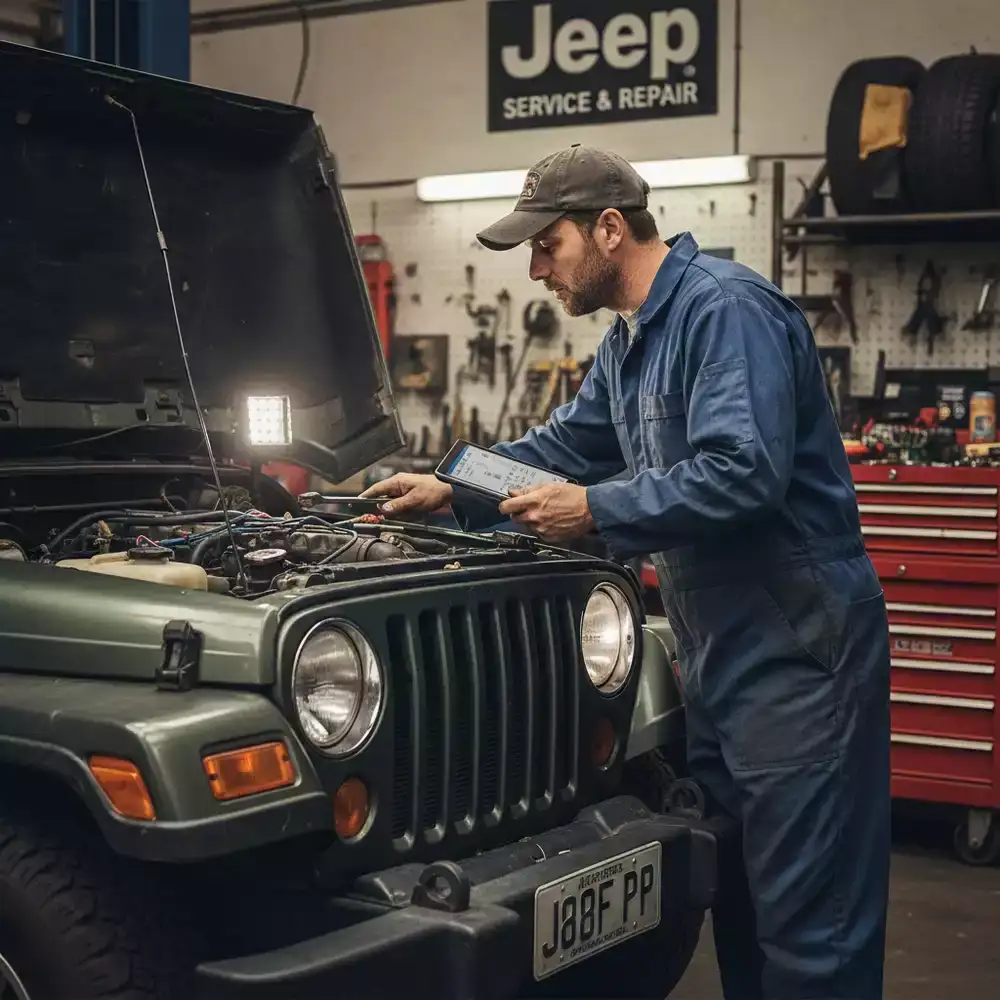
How Driving Conditions and Engine Type Affect Maintenance
While the mileage schedule gives you a baseline, your actual maintenance needs can vary significantly depending on how you drive—and which engine your Wrangler has.
Engine Differences: 2.0L vs 3.6L
Not all Wrangler engines follow the same replacement intervals.
- 2.0L Turbo Engine
- Spark plugs typically replaced around 60,000 miles
- Follow-up replacement around 120,000 miles
- More sensitive to oil quality and driving conditions
- 3.6L Pentastar V6
- Spark plugs last longer, typically around 100,000 miles
- Fewer major service intervals early in the vehicle’s life
This is one of the biggest differences in long-term maintenance planning.
Severe Duty Driving: When to Service More Often
Jeep defines “severe duty” as driving that puts additional strain on the vehicle. This includes:
- Off-roading
- Towing or hauling
- Driving in dust, sand, or mud
- Frequent short trips or extended idling
- High temperatures or stop-and-go traffic
Under these conditions, maintenance intervals should be shortened.For example:
- Oil changes may be needed closer to 4,000–5,000 miles instead of waiting for the full interval
- Transfer case and axle fluids may need earlier replacement
- Filters may clog faster and require more frequent changes
If you regularly go off-roading, then chances are you’ll have to service your vehicle more often than you otherwise would need to, and more often than what you see listed in the suggested intervals.
Fluid Service: Inspect vs Replace
One area where Jeep differs from other brands is fluid maintenance. Instead of assigning strict replacement intervals for every fluid, Mopar often recommends that you:
- Inspect fluids regularly
- Replace when needed or under heavy use
This applies specifically to:
- Transfer case fluid
- Front and rear axle fluid
- Transmission fluid
If your Wrangler is used for off-road driving or towing, these fluids may need to be serviced much sooner than the standard schedule suggests.
Schedule Wrangler Service in KS Now
Wondering where to take a Jeep Wrangler for maintenance in Wichita, KS or the nearby areas? Look no further than Victory Chrysler Dodge Jeep RAM of Ottawa!
Not only does servicing your vehicle at a Jeep dealership ensure that you maintain warranty coverage, but it also ensures that you get the right services completed at the right times. That’s because our Mopar-certified service technicians are intimately familiar with the 2026 Wrangler service schedule.
Ready to give your Wrangler the TLC it deserves? Schedule service now.
0 comment(s) so far on How Often Should You Service Your Jeep Wrangler? (Official 2026 Mopar + Owner’s Manual Advice)